Connect with Us
Looking for expert guidance on endoscopic solutions?
Reach out to us and explore imaging innovations that transform medical diagnostics.
Looking for expert guidance on endoscopic solutions?
Reach out to us and explore imaging innovations that transform medical diagnostics.
By Ottomed |
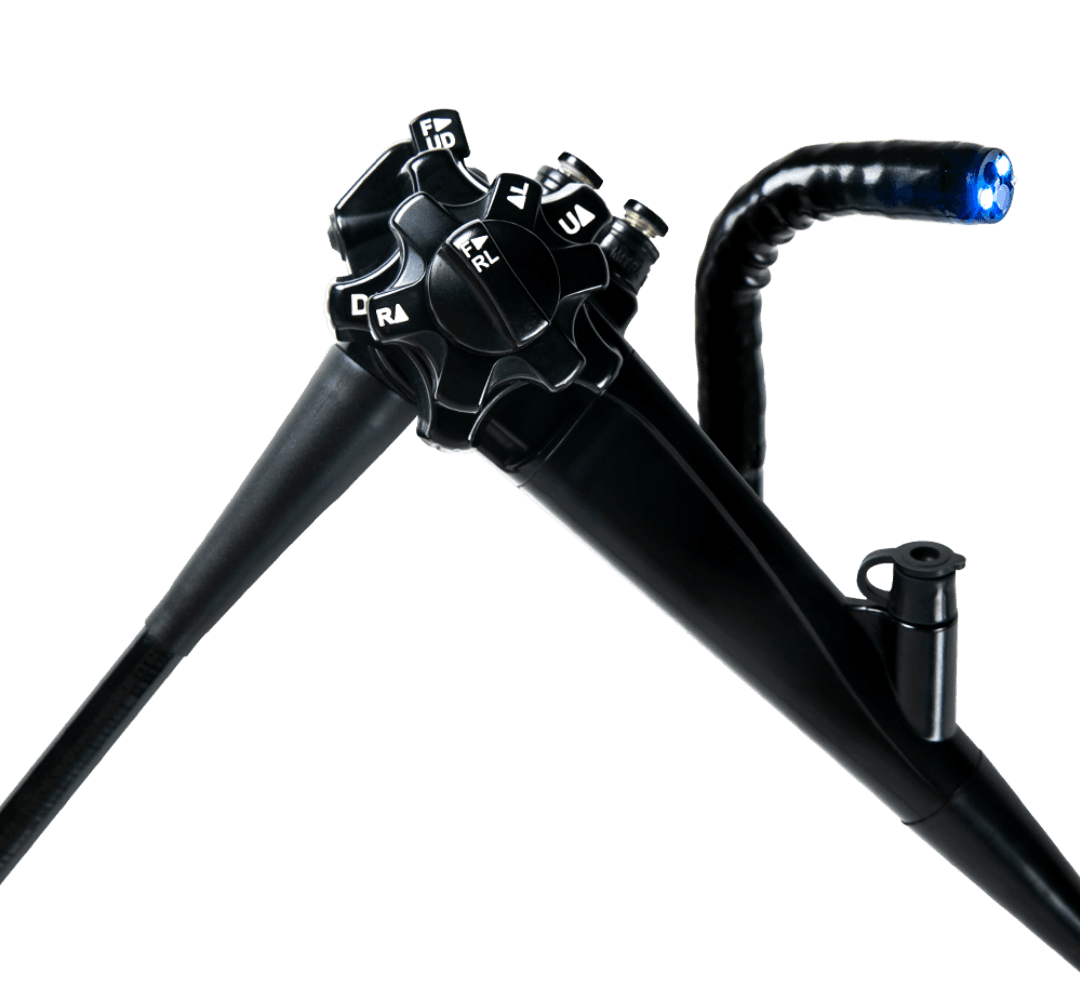
Gastrointestinal endoscopy is one of the most widely performed procedures in modern medicine. Its diagnostic and therapeutic utility is pivotal in detecting early neoplastic changes, guiding biopsy, and enabling minimally invasive interventions.
However, despite high-definition endoscopes and improvements in procedural training, several studies suggest that the miss rate for adenomas remains unacceptably high. In particular, right-sided colon cancers and flat lesions often escape detection due to blind spots caused by anatomical folds, suboptimal illumination, and reduced mucosal contrast.
In this article, we discuss the challenge of missed lesions in diagnostic endoscopy, identify the technical factors related to imaging contributing to these limitations, and highlight how technological innovations in endoscopes address these gaps.
Tandem colonoscopy studies—where patients undergo two sequential colonoscopies—have consistently shown that adenomas are missed in 20–26% of cases1. This figure is even higher for flat or sessile lesions, which may blend with surrounding mucosa or be hidden behind anatomical folds. Right-sided colonic neoplasms are particularly prone to being missed, contributing to interval cancers that appear between routine screenings.
Missed adenomas delay diagnosis, reduce the effectiveness of cancer screening programmes, and ultimately impact patient survival. With colorectal cancer being one of the leading causes of cancer-related death globally, enhancing lesion detection is of paramount importance.
Numerous factors, from bowel preparation to patient-related issues, pose visualisation challenges. However, lighting in endoscopy remains one of the most critical factors leading to missed adenomas, neoplasms, lesions, and cancers. This is because:
These challenges reduce the likelihood of detecting flat, depressed, or vascular lesions that require enhanced contrast or close-focus examination.
Technological Innovations to Address These Issues
Modern endoscopic platforms integrate precision imaging, innovative light delivery, and intelligent processing to address the limitations discussed above.
Optimised Wavelength Light Absorption for Better Contrast and Clarity :Modern endoscopes address the problem of poor lighting and visualisation by integrating light sources that illuminate at specific wavelengths and specially designed image sensors to absorb those wavelengths. This technology enhances the differentiation of mucosal textures and microvascular structures. Optimised wavelength light absorption:
For instance, Ottomed’s mBLU imaging technology introduces proprietary contrast modulation that optimises short-wavelength light absorption patterns and enhances visibility of superficial lesions often missed under standard white light.
Improving Visualisation – A clinical imperative
Missed lesions in gastrointestinal endoscopy represent a persistent challenge with significant clinical consequences. Addressing the issues caused by outdated illumination systems and imaging constraints requires a systemic approach that integrates advanced imaging, better lighting, and real-world usability.
Modern endoscopy systems offer a unified response to these clinical demands through innovations that enable image-enhanced endoscopy, with light sources optimised to deliver specific wavelengths and special sensors to absorb them. Technologies like Ottomed’s mBLU address the visualisation problems related to lighting. They enhance the endoscopists’ diagnostic precision.
Ultimately, improving visualisation is not just a technical challenge—it is a clinical imperative. Through thoughtful design and innovation rooted in frontline medical practice, modern endoscopy platforms are advancing the future of endoscopy—helping clinicians see more, miss less, and deliver better outcomes.
Mitra Ottomed, a brand of legacy-rich Mitra Group, is a leading innovator in high-definition endoscopy systems and imaging solutions designed for early detection, accurate diagnosis, and smarter clinical decisions. Backed by decades of trust and technological excellence, Ottomed endoscopes deliver sharper images, greater clarity, and precision diagnostics. Because in healthcare, details truly do matter.
To learn more about our endoscopy systems and service solutions, visit www.ottomed.com.